
How to Choose Thermal Ribbon for Synthetic Labels and Print Needs
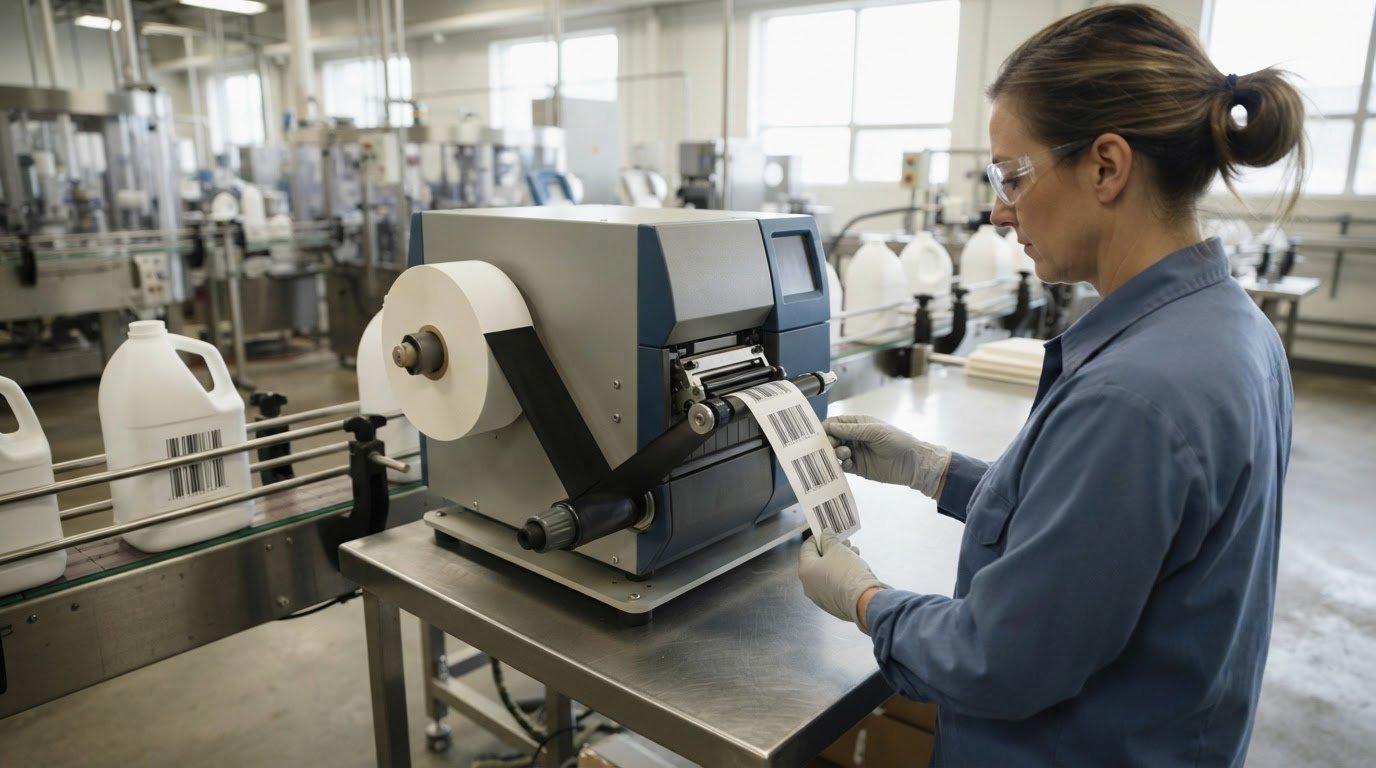
The toughest ribbon isn’t automatically the right choice for every synthetic label. Choosing the correct thermal ribbon for synthetic labels starts with matching the ribbon to the label material and the conditions it will face. Resin is suited to demanding environments and synthetic materials, while wax-resin can work with some synthetic stocks.
It’s easy to focus on the label alone, but print quality also depends on the printer and the application. A poor match can reduce image durability and barcode readability, while unsuitable settings or ribbon choices may increase printhead wear.
This guide explains how to match wax-resin and resin ribbons to common synthetic materials and assess exposure to moisture, chemicals, abrasion and temperature. You’ll also learn what to consider for clear barcodes, consistent print quality and printhead protection, helping you narrow down a suitable option for your labels and printing needs.
Key Takeaways
- Match ribbon formulation to the synthetic label material, then factor in exposure to moisture, chemicals, abrasion and temperature.
- Use resin for demanding conditions; wax-resin may suit some synthetic stocks when their performance meets the application’s needs.
- Confirm ribbon and printer compatibility, including the printhead type and ribbon winding direction.
- For readable barcodes and clear print, consider print speed, darkness settings and the detail level of the design.
- Test the ribbon-label combination under conditions that reflect actual use, especially for critical applications.
How do I know which thermal transfer ribbon is right for my label?
Start by identifying the label’s material and the conditions its printed image must withstand. Canadian requirements depend on the application; for apparel wash-care labels, the International Organization for Standardization identifies ISO 6330 as a wash-testing standard.
-
Assess environmental exposure and durability needs
Start by listing the conditions the label will face, such as handling abrasion, moisture, temperature changes or direct sunlight. Choose a ribbon according to the resistance the application requires. For example, a product stored outdoors needs a print that can withstand sun and moisture, while an indoor asset label may face more abrasion than weather exposure.
Consider the label’s full use cycle, not just the moment it comes off the printer. Labels on frequently handled equipment can scuff over time; labels exposed to chemicals need resistance suited to that contact. Resin ribbons offer strong resistance to abrasion, chemicals and high temperatures. For wash-care labels, account for repeated laundering and relevant wash-testing needs rather than judging the ribbon by its appearance immediately after printing.
-
Select resin for polypropylene labels
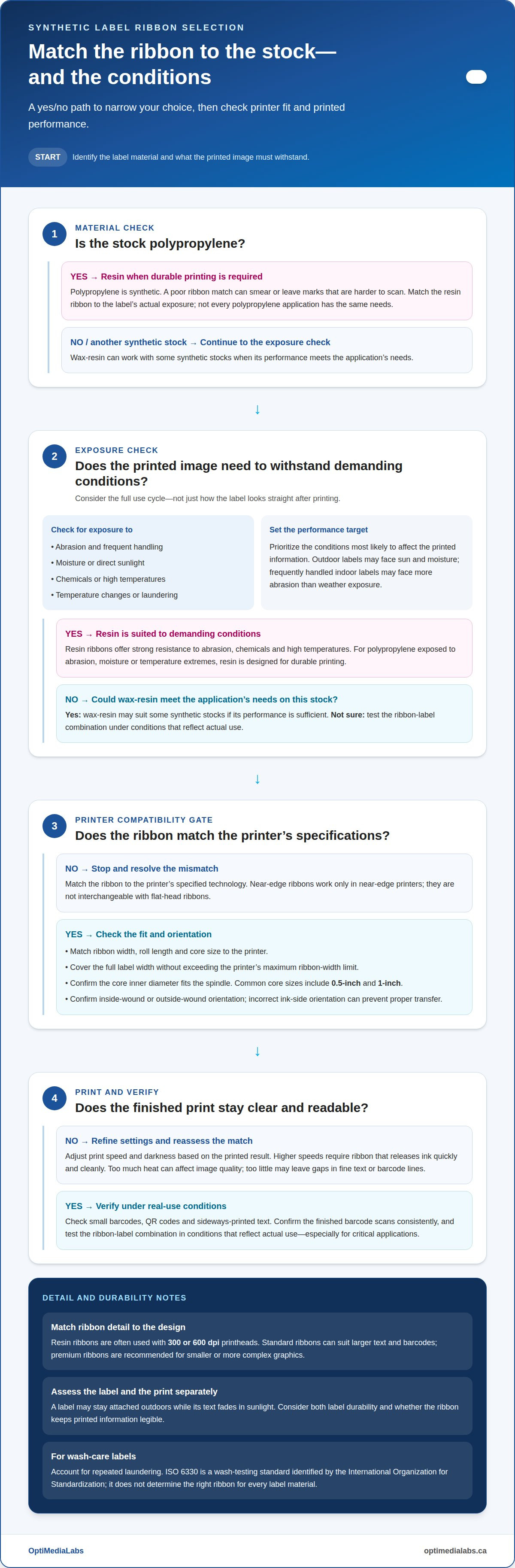
For polypropylene, choose a resin ribbon when durable printing is required. Polypropylene is a synthetic label material, and a poorly matched ribbon can smear or leave marks that are harder to scan. Resin is designed for demanding applications and synthetic materials, making it a practical choice when print resistance matters.
Next, consider what the printed label must endure. A polypropylene label exposed to abrasion, moisture or temperature extremes needs a durable image, not simply dark print straight from the printer. Resin ribbons are designed to resist these conditions. Match the ribbon to the label’s actual exposure, and don’t assume every polypropylene application has the same requirements.
- Assess print durability and label durability separately. The label material must suit its environment, while the ribbon must keep the printed information legible. For example, a label may stay attached outdoors while its text fades in sunlight. Evaluating both helps identify the real risk of failure.
For wash-care applications, ISO 6330 is relevant because it provides a wash-testing standard identified by the International Organization for Standardization. Use that context to consider laundering alongside abrasion and moisture. It does not, by itself, determine which ribbon is right for every label material.
- Set a practical performance target before choosing a ribbon. Decide whether the application needs resistance to rubbing, chemical contact, moisture, heat or sunlight, then prioritize the conditions most likely to affect the printed image. Outdoor equipment labels may need greater weather resistance, while frequently handled indoor labels may need stronger abrasion resistance.
For workflows that also use colour labels, Afinia labels represent a separate label category from synthetic thermal-transfer stock. Keep the substrate and printing method in view when assessing each application. That distinction helps prevent a durable ribbon choice from being treated as a universal solution for every label.
Print quality, barcode readability and printhead wear
Thermal transfer quality depends on the ribbon, label stock and printer working together. Check compatibility and print performance before starting a production run.
-
Confirm printer and ribbon compatibility
Match the ribbon to the printer’s specified technology, including flat-head or near-edge operation. Near-edge ribbons work only in near-edge printers, so they aren’t interchangeable with flat-head ribbons. Near-edge printing can be useful in some packaging applications.
Thermal transfer printing uses heat from the printhead to transfer ink from the ribbon onto the label. At higher print speeds, the ribbon needs to release ink quickly and cleanly. High-sensitivity ribbons can support this process. A mismatch can cause incomplete transfer, poor definition or uneven barcode edges, even when the label material is suitable.
-
Match ribbon dimensions and ink-side orientation
Compare the ribbon’s width, roll length and core size with the printer’s requirements. The ribbon should cover the full label width while staying within the printer’s maximum ribbon-width limit. A wider ribbon can help protect the printhead, but excessive width may waste material or exceed the printer’s capacity.
Core inner diameter must fit the printer spindle. Thermal-transfer ribbons commonly use 0.5-inch or 1-inch cores, while some longer rolls may be too large for smaller desktop printers. Confirm whether the printer needs inside-wound or outside-wound ribbon. Incorrect ink-side orientation can prevent proper transfer onto the label.
- Adjust speed and darkness to suit the material and ribbon combination. There’s no single temperature, speed or darkness setting for every synthetic label. Use the printer’s controls to refine clarity: adjust darkness and speed based on the printed result. Excess heat can affect image quality, while insufficient heat may leave gaps in fine text or barcode lines.
Check small barcodes, QR codes and sideways-printed text closely. Resin ribbons are often used with 300 or 600 dpi printheads, which support detailed printing. Standard ribbons can suit larger text and barcodes, while premium ribbons are recommended for smaller or more complex graphics. Confirm the finished barcode scans consistently.
- Include printhead wear in your assessment of print quality. High-volume, mission-critical printing with a cheaper ribbon can shorten printhead lifespan. A suitable ribbon and well-adjusted settings help avoid excessive friction or heat during transfer. Consider whether the print will face chemicals or repeated handling, too: an image that looks clean at the printer may not remain readable in use.
Test the ribbon-label combination with the actual text, barcode size and operating speed. Inspect edges, gaps, smearing and scan results. A small test run can reveal transfer issues before they affect a full batch. For help aligning ribbon and printer requirements, discuss your printing setup.
Wax-resin ribbon compatibility with synthetic materials and films
Both wax-resin and resin can work with synthetic labels, but they suit different needs. Choose wax-resin for compatible stocks and moderate durability; choose resin for demanding exposure and stronger resistance.
-
Compare wax, wax-resin and resin ribbons
Identify the ribbon formulation before matching it to the label material. Wax ribbons are generally suited to paper labels and short-term indoor printing. Wax-resin combines wax and resin, offering greater durability and resistance to smearing than full wax. Resin is designed for synthetic materials and demanding applications that require stronger resistance to abrasion, chemicals or temperature changes.
Use these differences to narrow your options. Wax-resin works with coated paper and some synthetic stocks, while resin is the more durable choice for harsh conditions. Neither formulation is universal, so match its performance to the substrate and intended use.
-
Use wax-resin with coated and gloss stocks
Choose wax-resin for coated or gloss paper labels when the print needs more resistance to smudging or moisture than wax provides. This formulation can also work with some synthetic materials, including synthetic papers and films such as BOPP, PET and PVC.
Confirm the specific stock with a print test. Wax-resin performance varies across label surfaces, including smooth coatings and synthetic blends. Check the printed area for smears, scratches and scuffs, then see whether it remains readable after normal handling. For less demanding applications, wax-resin may provide suitable durability without requiring full resin.
-
Choose resin for plastic and synthetic paper
Choose full resin for plastic or synthetic paper labels when maximum durability is the priority. Resin ribbons are recommended for synthetic materials such as polyester, polypropylene and vinyl, particularly when abrasion, moisture, chemicals or outdoor exposure could compromise legibility.
Polyester typically calls for pure resin when maximum adhesion and durability are required. Polypropylene may work with wax-resin in some applications, but demanding conditions favour resin. Don’t assume a wax ribbon will bond reliably to polyester: poor bonding can cause smearing and unreliable scanning.
- Test the complete ribbon-and-label combination under the conditions it will face. Print on the intended material, then check adhesion, image clarity and resistance to expected handling or exposure. For example, a glossy synthetic product label kept indoors may perform adequately with wax-resin, while an outdoor equipment label exposed to abrasion and moisture calls for resin. Base the final choice on the stock’s surface and the application’s durability requirements.
How do you match ribbon type to label material?
Match the ribbon to the substrate first, then consider print quality and expected lifespan. Polyester, polypropylene, polyethylene and PVC each have different surface characteristics.
-
Identify the synthetic label material
Read the label-stock specification and identify its material, such as PET, PP, PE or PVC. Don’t treat all plastic films as interchangeable: a formulation that prints well on one substrate may not bond effectively to another. Note whether the surface is coated, glossy, matte or textured, since the finish affects ribbon contact.
Keep synthetic paper and plastic film distinct in your records. Both are synthetic label materials, but they aren’t the same substrate. For example, BOPP film and synthetic paper may accept different ribbon formulations. Record the exact stock and finish before choosing a ribbon; a general description such as “synthetic” isn’t detailed enough for a reliable match.
-
Match ribbon formulation to the substrate
Start with resin for polyester when strong adhesion and durability are priorities. Resin ribbons are also used with polypropylene and vinyl, particularly for industrial labels needing resistance to abrasion, moisture or chemicals. For polyethylene, use the stock’s material guidance and test the ribbon-substrate combination rather than assuming another film’s results will transfer.
Wax-resin can suit some synthetic stocks, including synthetic papers and films such as BOPP, PET and PVC. It may be appropriate when moderate resistance and print quality meet the application’s needs. Some synthetic paper stocks are recommended for full-wax ribbon, so distinguish them from plastic films before selecting a formulation.
- Set the durability target according to the label’s actual use. A product label stored indoors may need less resistance than an industrial identifier exposed to moisture, handling or temperature changes. Choose a formulation that maintains legibility under the conditions that matter, rather than selecting resin solely because the substrate is synthetic.
Treat textile tags and metallized labels as specialty substrates. These materials may need ribbon formulations designed for their surfaces. Don’t assume a standard wax-resin or resin ribbon is compatible just because it works on a common film.
- Test the exact combination before a critical print run. Print on the chosen material, then check adhesion, smearing and image clarity. Reproduce relevant handling or environmental conditions, such as rubbing or moisture exposure. Testing is especially useful with coated, gloss-finished or blended synthetic stock.
Record the material, surface finish and ribbon formulation that produced acceptable print quality. If the substrate changes from PET to PP, for example, reassess the match instead of automatically carrying over the previous settings. This helps maintain consistent results across different label materials.
Ribbon selection for synthetic labels
A sound approach to choosing the correct thermal ribbon for synthetic labels considers the application, substrate and printed content together. The material of a synthetic label alone doesn’t determine which ribbon it needs.
- Define what the label must do after printing. Record where it will be used, how long its information needs to remain readable and what it will encounter. A retail product label stored indoors has different demands from an outdoor equipment identifier exposed to sunlight and moisture. Note temperature changes, abrasion and chemical contact when relevant.
Distinguish the label’s expected lifespan from the product’s lifespan. A short-term shipping label may not need the same image durability as an asset label that stays in service. These requirements help you decide whether wax-resin resistance is adequate or resin is more suitable.
- Match the formulation to the exact substrate. Polyester generally calls for resin when maximum adhesion and durability are required. Polypropylene may work with wax-resin in some applications, while resin suits more demanding conditions. For synthetic paper, distinguish the stock from plastic film because recommended ribbon formulations can differ.
Don’t record “synthetic” as the only material description when purchasing. Specify polyester, polypropylene, PVC or synthetic paper, and include the surface finish. A coated synthetic stock, for example, may print differently from an uncoated film, even if both are used for product labels.
- Identify the printed information that must remain readable. Small barcodes, compact text and product identifiers need crisp edges and dependable scanning. Consider the label’s size and text alongside its required lifespan. A broad shipping barcode may have different detail requirements from a compact industrial rating label.
Choose ribbon durability according to exposure, not the label category alone. A retail label kept indoors may need less resistance than a barcode on equipment exposed to abrasion. Include chemicals, moisture and outdoor conditions in the selection criteria whenever they apply.
- Compare a sample print with real-use requirements before standardizing your choice. Print the intended text and barcode on the exact label stock, then inspect clarity and scan performance. Test for relevant conditions, such as rubbing or temperature variation. This can reveal a weak ribbon-substrate match before it affects a production run.
Keep the final material, ribbon type and printer settings together in the job record. Reassess the combination if the stock changes from polyester to polypropylene, or if a label moves from indoor retail use to outdoor identification. Documenting the process of choosing the correct thermal ribbon for synthetic labels makes it easier to maintain consistency. Discuss your synthetic label and ribbon requirements for help narrowing the selection.
OptiMediaLabs Canada: Thermal Transfer Ribbons
OptiMediaLabs Canada offers Thermal Transfer Ribbons for printing needs involving synthetic label stock. Once you’ve identified the material, required durability and printer technology, those details help narrow the ribbon type that fits your application.
Consider a thermal transfer ribbon when labels need durable printed information, such as barcodes or product details. Match the ribbon to the substrate and printer specifications, then test the combination under conditions that reflect the label’s use. This helps assess print clarity and barcode readability before a production run.
For a ribbon option suited to your label and printing requirements, contact OptiMediaLabs Canada.
Put your ribbon choice into practice
Turn your selection into a clear specification for the next print run. Record the label material, printer technology and performance requirements together, so changes to the stock don’t quietly create a mismatch. Choosing the correct thermal ribbon for synthetic labels is part of building a reliable labelling workflow, not simply selecting a consumable.
OptiMediaLabs Canada offers Afinia Color Label Printers and RFID Label Printers, alongside thermal transfer ribbons. These product categories can support different parts of a labelling setup, depending on your equipment and application. If you’re planning a new setup or refining an existing one, share your label and printer requirements to discuss a practical next step.
Contact OptiMediaLabs Canada for help with your thermal ribbon requirements and move forward with a clearer plan.
Frequently Asked Questions
Need Help Choosing the Right Ribbon?
Start by gathering the exact label material, printer model and the conditions the printed label will face. This information narrows the options without relying on a broad description such as “plastic label.” OptiMediaLabs Canada offers Thermal Transfer Ribbons. If you’re considering a ribbon, contact OptiMediaLabs Canada with those application details to discuss the product category that fits your setup.
Wax vs Wax-Resin vs Resin Ribbons: What is the Difference?
The formulations differ in composition and image durability. Wax ribbons are mainly wax and suit general printing on paper. Wax-resin combines wax and resin, offering greater resistance to smearing and handling than full wax. Resin is designed for durable printing on synthetic materials and demanding applications. Focus on the performance you need, rather than paying for extra durability the label’s use doesn’t require.
How do polypropylene, polyester, and vinyl labels affect ribbon selection?
Polyester commonly needs pure resin for maximum adhesion and durability. Polypropylene may work with wax-resin in some applications, while resin is the stronger choice for demanding exposure. Vinyl is also a synthetic material commonly paired with resin. For example, a PP product label used indoors may have different requirements from a vinyl identifier exposed to abrasion. The exact stock and finish matter.
How can you match a thermal ribbon to a label printer and printhead?
Use the printer’s specifications to confirm ribbon type, printhead technology, winding direction and roll dimensions. A near-edge ribbon requires a near-edge printer, while a flat-head printer needs a compatible flat-head ribbon. Match the core and ribbon width to the printer’s spindle and limits, too. If a roll installs but doesn’t feed or transfer consistently, check orientation and compatibility first.
How do you test ribbon and label compatibility for adhesion, smudge, and scratch resistance?
Print a sample using the actual label stock, intended settings and representative text or barcode. Rub the image to check for smudging, then handle it as the label would be handled in use to look for scratches or scuffs. Check whether the ink remains adhered to the surface. For critical labels, test under representative conditions before committing to a production run.
Which ribbon works best for chemical, solvent, abrasion, UV, and outdoor exposure?
Resin is generally suitable for labels facing chemicals, solvents, abrasion, UV exposure or outdoor conditions. Its printed image is designed for demanding environments, including exposure to moisture and temperature extremes. Performance still depends on the specific chemical and conditions. For example, evaluate an outdoor asset label for both sunlight and handling abrasion, not sunlight alone.
What are the differences in cost and performance between wax-resin and resin ribbons in Canada?
Resin generally costs more than wax-resin, while providing greater durability for demanding synthetic-label applications. Wax-resin can offer a practical balance for compatible stocks that need more resistance than wax alone. Compare the performance required, not ribbon price in isolation. Consider how often the label is handled and whether it faces moisture, chemicals or temperature changes.
What problems can the wrong thermal ribbon cause, and how can they be diagnosed?
A poor ribbon match can cause smearing, weak adhesion, unclear text or barcodes that scan inconsistently. First, check whether the ribbon type suits the label material and printer. Then inspect ink-side orientation and confirm the printer’s speed and darkness settings. Change one setting at a time and print another sample. If the image remains poor, test a compatible ribbon-and-label combination.