
Label Finishing Equipment Media Widths and Pricing
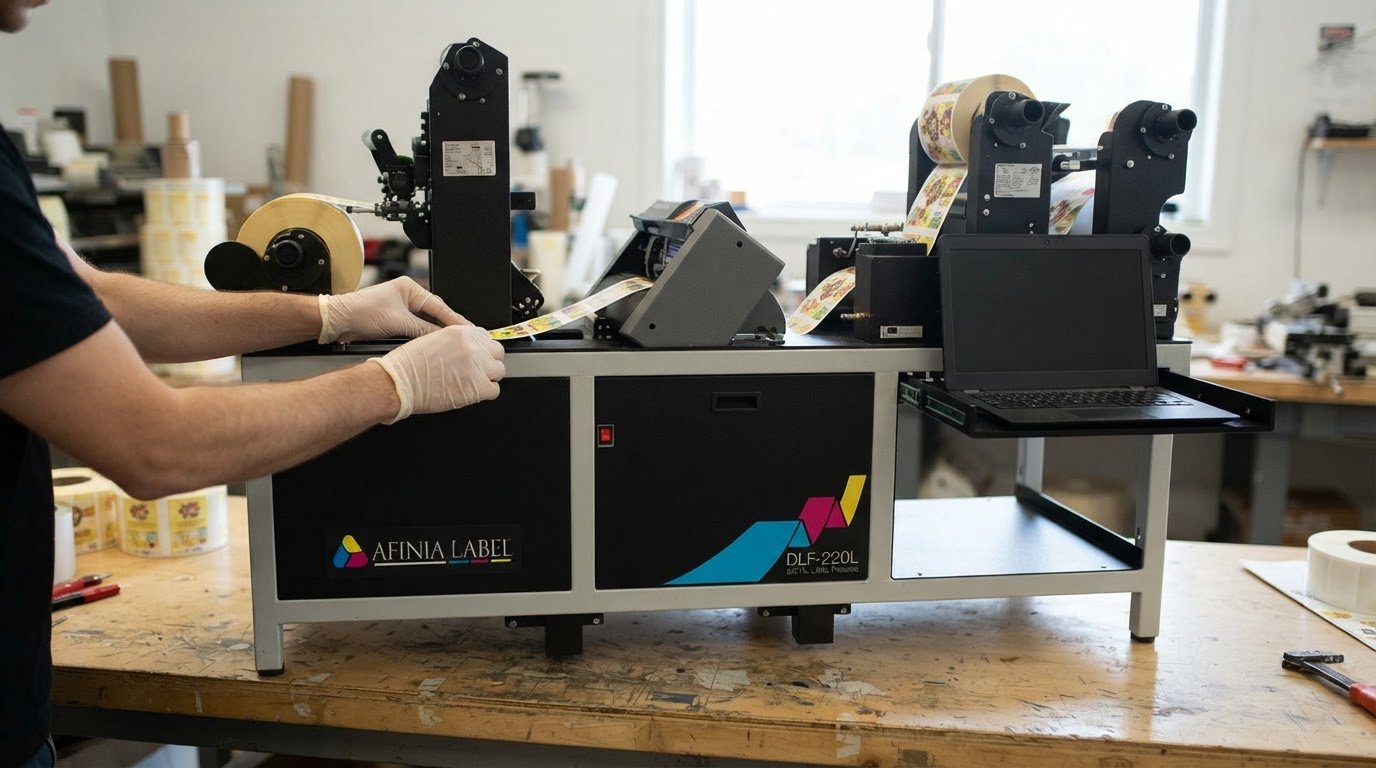
The right finisher depends on the media width and the work your label production needs. Among Afinia finishing equipment, the DLF-220L can cut, rewind, slit, laminate and remove matrix in a single process. Related models cover different formats: the DLF-350L supports media up to 13 inches (350 millimetres), the DLF-220s is specified for 8.5-inch media, and the DLF-140s for 5.5-inch media.
Choosing afinia finishing equipment involves more than matching a web width. Your workflow, required finishing functions, and production setup all affect the right fit. Comparing how the available equipment works can help you narrow your options.
This guide explains what the DLF-220L does, outlines media widths across related Afinia equipment and introduces other finishing options, including digital label presses with inline finishing. It also covers how to think about price comparisons without losing sight of the specifications that matter most for your operation.
Key Takeaways
- See how the DLF-220L combines cutting, rewinding, slitting, laminating and matrix removal in one process.
- Compare supported media widths across related finishers to narrow options for your label format.
- Explore how tabletop, desktop and wider-format equipment differ, including inline finishing options.
- Use the Canadian-dollar price comparisons to understand how equipment options differ in cost.
- Learn how label production requirements can guide your choice of printer, finishing equipment and related supplies.
Afinia DLF-220L label-finishing functions
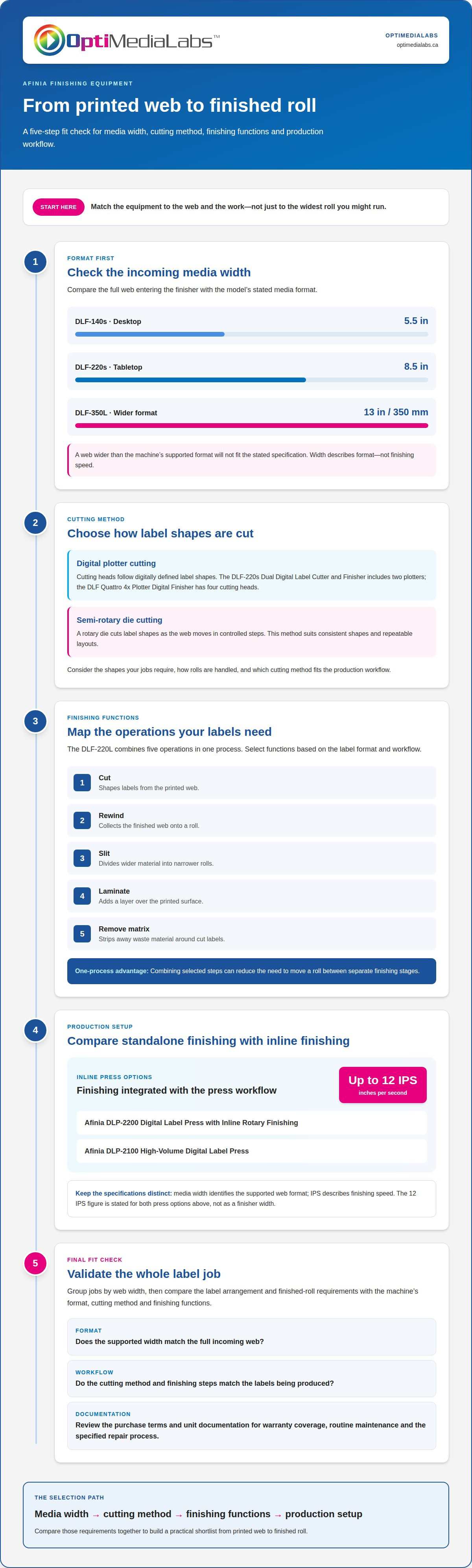
The Afinia DLF-220L combines five finishing operations in one process. It can cut, rewind, slit, laminate, and remove matrix. Matrix removal separates finished labels from surrounding waste material. Combining these steps can reduce the need to move a roll between separate finishing stages. The sequence matters: printed media enters the system, receives its selected finishing operations, then exits as a finished roll. Choose functions based on the label format and the production workflow.
Each finishing operation has a distinct purpose. Cutting shapes labels from the printed web; slitting divides wider material into narrower rolls; and rewinding collects the finished web onto a roll. Lamination adds a layer over the printed surface, while matrix removal strips away waste around cut labels. A job requiring shaped, laminated labels may combine cutting, lamination, and matrix removal. Roll-format work may also call for slitting and rewinding.
Digital plotter finishing uses cutting heads to follow label shapes. The Afinia DLF-220s Dual Digital Label Cutter and Finisher includes two plotters. The Afinia DLF Quattro 4x Plotter Digital Finisher has four cutting heads. These configurations suit workflows where digital cutting is central. Consider the shapes, roll handling, and finishing steps required for each job. A plotter-based system can handle digitally defined shapes without relying solely on a fixed rotary die.
High-volume digital label presses combine printing and finishing around production throughput. The Afinia DLP-2200 Digital Label Press with Inline Rotary Finishing finishes at up to 12 IPS. The Afinia DLP-2100 High-Volume Digital Label Press also finishes at up to 12 IPS. IPS means inches per second. These press options differ from standalone finishers because finishing is integrated with the press workflow. Compare the required finishing method and production pace before choosing a system.
Semi-rotary die finishing uses a rotary die to cut label shapes as the web moves in controlled steps. Plotter cutting works differently, with cutting heads tracing the shapes. Die-based finishing suits work with a consistent shape and repeatable layout, while digital plotter finishing can accommodate varying shapes. Choose according to the cutting method your jobs need and how finishing fits into printing and roll handling.
Tabletop and desktop finishers suit compact workflows. The Afinia DLF-220s Tabletop Digital Label Finisher is specified for 8.5-inch media. The Afinia DLF-140s Desktop Digital Label Finisher is specified for 5.5-inch media. Those widths help distinguish smaller-format equipment from wider systems. Match the machine’s supported media width to the web entering the finisher. Then consider whether its finishing functions align with the labels you produce.
In Canada, warranty coverage, maintenance instructions, and repair arrangements are set out in the purchase terms and documentation for each unit. Review the relevant documentation for coverage, routine-care steps, and the specified repair process.
Compare the DLF-220L’s combined functions with the cutting method, format, and workflow of each alternative. That creates a practical shortlist based on how labels move from printed web to finished roll.
Related equipment media widths
Media width helps narrow the right format. The Afinia DLF-140s Desktop Digital Label Finisher is specified for 5.5-inch media. The DLF-220s Tabletop Digital Label Finisher handles 8.5-inch media. The DLF-350L Dual Plotter Digital Label Finisher supports 13-inch media, or 350 millimetres. These specifications distinguish compact, tabletop, and wider-format models.
Compare the listed media width with the full web entering your finisher. A roll that exceeds the machine’s supported width won’t fit the stated format. A narrower web may also leave unused capacity. For example, the DLF-350L’s 13-inch capacity gives more width than the DLF-220s’s 8.5-inch specification. The difference matters when selecting equipment for existing label layouts.
Width is only one part of the decision. Consider the printed web, label arrangement, and finished-roll requirements together. A 5.5-inch format may suit work planned for the DLF-140s. A wider layout points toward the DLF-350L’s 13-inch support. Match the format to actual jobs, not just the widest roll your operation might encounter.
Media width and cutting speed describe different limits. Width identifies the supported web format. Speed describes how quickly a press finishes material. The Afinia DLP-2200 Digital Label Press with Inline Rotary Finishing finishes at up to 12 IPS. The DLP-2100 High-Volume Digital Label Press also finishes at up to 12 IPS. IPS means inches per second. Those speed figures don’t state a finisher’s media width.
Keep the distinction clear during equipment comparisons. First, identify the maximum supported media width for the model. Then compare its finishing method and any stated speed. For example, the DLF-350L’s 13-inch width is a format specification, while 12 IPS describes the finishing speed of the DLP-2200 and DLP-2100. Neither value can replace the other.
Start by identifying the widest web your current jobs require. Match that measurement to the model’s stated format, then decide whether your workflow calls for a standalone finisher or an inline press. This keeps web width separate from throughput considerations and avoids confusing an IPS figure with a media-width rating.
Before settling on a format, group label jobs by web width and finishing workflow. Compare those needs with the DLF-140s, DLF-220s, and DLF-350L specifications. For equipment-format questions tied to your label workflow, use the equipment selection contact option.
Related Afinia finishing equipment
The DLF-220L is one option within a broader equipment range. The DLF-350L is a 13-inch digital label cutter and finisher. The DLF-220s Dual Digital Label Cutter and Finisher uses two plotters. The DLF Quattro 4x Plotter Digital Finisher has four cutting heads. These models differ in format and cutting configuration, so compare the work each must handle.
The DLF-1100 Digital Label Finisher with Laminate Liner Rewind is another configuration. Its name identifies laminate liner rewinding as part of its function. The DLF-140s Desktop Digital Label Finisher and DLF-220s Tabletop Digital Label Finisher represent smaller-format categories. Together, these names help distinguish desktop, tabletop, and wider-format equipment without treating every finisher as interchangeable.
High-volume workflows can also use a press with finishing integrated. The Afinia DLP-2200 Digital Label Press includes inline rotary finishing. The DLP-2100 is identified as a high-volume digital label press. These press systems differ from standalone cutters and finishers. Consider whether printing and finishing should share one production workflow or remain separate stages.
Which Canadian dealers sell or service Afinia finishing equipment? The relevant sales channel is the Canadian seller handling the specific model, while service arrangements follow the purchase relationship. Keep the model name and purchase documents available when arranging support for a DLF-220L or another unit.
Model differences also shape a practical shortlist. A DLF-350L provides a 13-inch format, while a DLF-220s configuration includes two plotters. The DLF Quattro has four cutting heads. Compare format, cutting configuration, and whether the system is a standalone finisher or integrated press. Those concrete distinctions help align equipment with label jobs.
What safety requirements and operating steps apply to Afinia finishing equipment? Follow the operating instructions for the exact model, including its startup, threading, and shutdown procedures. Keep hands clear of moving parts during operation, and stop the machine before clearing material or performing routine handling.
Before operation, identify the model and prepare the label roll for its intended path. Feed the web according to that unit’s instructions, then confirm it tracks through the finishing area. Use the DLF-220L’s documented sequence for its selected functions. Don’t assume that controls or threading steps transfer unchanged from the DLF-1100 or DLF-350L.
For ongoing operation, use the maintenance steps specified for the machine. Remove waste material as directed, keep the work area orderly, and stop production if the web feeds incorrectly. The DLF-220L, DLF-220s, and DLF-350L have different configurations. Applying the correct model instructions is essential for safe, consistent handling.
Choose equipment according to its role in your production setup. A standalone DLF model provides a separate finishing stage, while a DLP press integrates finishing into the press workflow. Before selecting a system, compare these roles with the labels, roll handling, and cutting configuration required for each job.
Related equipment prices
Price comparisons are useful only when the equipment roles match. The DLF-140s Desktop Digital Label Finisher, DLF-220s Tabletop Digital Label Finisher, and DLF-350L serve different format needs. The DLF-350L supports 13-inch media. A comparison that ignores capacity can make unlike machines seem directly interchangeable. Start with the required format and finishing workflow, then compare models within that use case.
The DLF-220L combines cutting, rewinding, slitting, laminating, and matrix removal. The DLF-1100 Digital Label Finisher with Laminate Liner Rewind names a more specific function. Compare these systems by the operations included, not by model names alone. If a workflow needs several finishing stages, a combined-function machine and a focused finisher represent different equipment choices.
Use a consistent comparison process:
- Match format: compare the DLF-140s, DLF-220s, and DLF-350L against required media width.
- Match function: identify whether cutting, slitting, lamination, rewinding, or matrix removal matters.
- Match system type: distinguish standalone finishers from presses with inline finishing.
- Compare equivalent configurations: avoid treating different workflows as like-for-like options.
The DLF-220s name appears in two distinct equipment descriptions. The DLF-220s Tabletop Digital Label Finisher is specified for 8.5-inch media. The DLF-220s Dual Digital Label Cutter and Finisher includes two plotters. Keep the exact description attached to each comparison. Otherwise, differences in format or configuration can be missed when evaluating options.
Broader production systems need a separate comparison. The DLP-2200 Digital Label Press with Inline Rotary Finishing finishes at up to 12 IPS. The DLP-2100 High-Volume Digital Label Press also finishes at up to 12 IPS. These press systems combine printing and finishing roles, unlike standalone afinia finishing equipment models. Compare the complete workflow, rather than isolating the finishing function.
Equipment pricing also depends on which model and configuration meet the job requirements. Compare like with like: format, included finishing operations, and standalone versus inline production. A DLF-350L and a DLP-2200, for example, differ in system role, so a simple price comparison would not describe their operational differences.
Before making a shortlist, record the model name, media width, finishing tasks, and system type for each candidate. Include the DLF-220L, DLF-1100, and DLF-350L only where their functions fit. This gives a clear basis for evaluating equipment costs against production needs, without treating the lowest figure as the only decision point.
When evaluating afinia finishing equipment, listed prices are useful for comparison once you have matched equipment roles and configurations to the relevant workflow. Read each figure alongside the machine’s stated capacity and included operations, rather than treating different options as interchangeable.
Other listed prices relate to different equipment descriptions. Keep each price tied to its exact model description when reviewing your shortlist from OptiMediaLabs Canada.
What materials and media can Afinia finishing equipment process?
Think first about the label web, not just its surface. The DLF-220L performs finishing operations on label production media. Its functions include cutting, slitting, rewinding, laminating, and matrix removal. Each operation interacts with a different part of the finished web. Cutting shapes labels; matrix removal separates surrounding waste. Rewinding collects the processed material into a roll.
Lamination adds a layer to the label web. The DLF-220L includes this function, while the DLF-1100 Digital Label Finisher with Laminate Liner Rewind identifies liner rewinding in its name. These examples show why “material” can refer to more than the label face. The production path may also involve laminate and liner material. Account for each layer when planning the finishing sequence.
Substrate choice and machine function are related, but one does not establish the other. A finisher’s ability to cut or laminate does not identify every compatible label stock. Paper, film, adhesive, and laminate describe different material characteristics, each of which can affect feeding, cutting, or winding. Check the exact model’s material guidance when matching stock to your production setup.
For a practical review, trace each job’s material through its production stages:
- Printed web: identify the label stock arriving from the printer.
- Cutting: define the label shape and the surrounding matrix.
- Lamination: include the added layer in the web path.
- Rewinding: determine how the finished web is collected.
- Slitting: identify whether the finished web needs narrower rolls.
This sequence clarifies which functions matter for a given material. For example, a job requiring laminate and matrix removal needs those steps included in its finishing plan. A job requiring narrower rolls also needs slitting. The DLF-220L combines these operations, so the material path can be considered as one workflow rather than several disconnected tasks.
Material handling depends on the physical web as well as its composition. Roll direction, edge alignment, and tracking affect how media moves through a finisher. Align the web during setup and follow the model’s threading instructions. Do not assume material used with one Afinia machine will behave identically in another model.
Build a complete production setup by matching a compatible printer, label stock, and finishing workflow. Afinia Color Label Printers produce the printed labels, and Afinia labels provide media options. The finisher performs its specified operations on the printed web. Reviewing these stages together helps clarify material requirements before production.
Match the stock, laminate, and required finishing steps to the selected equipment’s instructions. For guidance on coordinating label media and finishing requirements, discuss your label production requirements.
OptiMediaLabs Canada: Afinia Color Label Printers
OptiMediaLabs Canada offers equipment and supplies for label production. For a finishing workflow, an Afinia Color Label Printer can handle the printing stage before labels move to finishing. RFID Label Printers support RFID label workflows, while Thermal Transfer Ribbons and Barcode Software serve other printing and labelling needs.
Turn to OptiMediaLabs Canada when comparing printing equipment or coordinating a printer with your label production process. Describe the labels you produce and how they move through printing and finishing to focus your selection on relevant equipment categories.
Contact OptiMediaLabs Canada to discuss your label printing requirements.
Plan your next label production step
Let your production needs guide the final equipment decision. Consider how printing, finishing, and supplies work together, then prioritise the factors that matter to your workflow. The setup should suit both the labels you produce and how they move through your operation.
OptiMediaLabs Canada offers Afinia Color Label Printers, RFID Label Printers, and compatible accessories for different parts of a label and identification setup. If you’re refining an existing workflow or planning a new one, share your requirements with OptiMediaLabs to focus on relevant **afinia finishing equipment** and supplies.
Choose the next step with your production goals in view. Contact OptiMediaLabs Canada to discuss your equipment needs and move forward with a clearer plan for your label workflow.
Frequently Asked Questions
What is Afinia finishing equipment?
Afinia finishing equipment refers to machines that convert printed label rolls into finished labels or rolls. Models include standalone digital finishers, plotter cutters, and digital label presses with inline finishing. For example, the DLF-220L is a finishing system, while the DLP-2200 combines digital label printing with inline rotary finishing. The right category depends on whether you need a separate finishing stage or an integrated press workflow.
What are the specifications and production speeds of Afinia finishing equipment?
Specifications vary by model. The DLF-220L is identified as a 120V-240V model, while the DLF-350L supports media widths up to 13 inches (350 millimetres). The DLP-2200 and DLP-2100 list finishing speeds of up to 12 IPS. Treat voltage, media width, and speed as separate specifications: match each one to your facility, label format, and production requirements.
How much does Afinia finishing equipment cost in Canada?
There is no single price for every model in Canada. The price depends on the finisher or press selected and its configuration. Compare equipment with the same production role, such as standalone finishing versus a press with inline finishing. Separate the machine price from delivery and other purchasing costs when budgeting, so you can assess the full equipment decision.